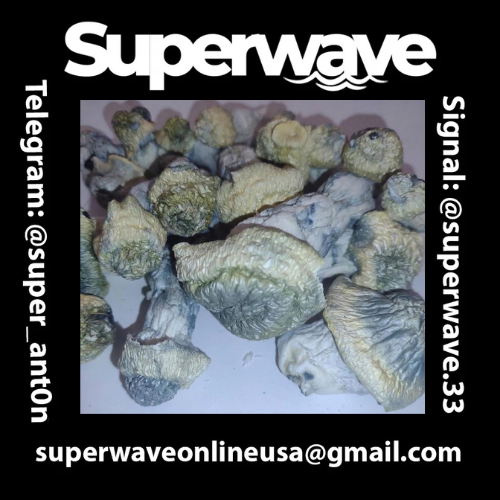

Please use only the official contact details below when reaching our support team.
Telegram account @Super_ant0n1 is NOT affiliated with us.
Our only official Telegram account is @Super_ant0n — without the “1” at the end.
For your security, always verify that you are communicating with one of the official accounts above before sending any payment. We cannot accept responsibility for payments sent to impersonators or unauthorized accounts.

Price range: $250.00 through $1,200.00
Casper mushrooms have a ghostly appearance, which explains the name rather well. The stems are thick, often white or slightly grey, with rounded caps that can develop shades of blue as they mature. Some specimens look almost silver. Others have a darker, bruised appearance, particularly around the cap.
Casper belongs to the Psilocybe cubensis species, the same species as Golden Teacher, Jack Frost and Albino Penis Envy. What makes Casper recognisable is its unusual colouring and stocky shape. It doesn’t resemble the classic golden-brown cubensis mushroom most people are familiar with.
There’s also an interesting story behind its genetics, although not every part has been independently documented.
Casper is commonly described in mushroom breeding circles as a cross between MakShak and Albino Penis Envy (APE).
The cross is attributed to a breeder known as Sly Loopsta. Specialist strain references preserve that account, but there isn’t much publicly available primary documentation showing the original breeding work, its date or the successive generations.
So the lineage is worth mentioning, without treating it as an established scientific pedigree.
Albino Penis Envy is the better-documented parent. It was developed by John Workman at Sporeworks, who crossed a pale PF Albino line with Penis Envy genetics. Workman has described the project himself, and the history has also been covered in interviews.
MakShak is less thoroughly documented in public sources.
Casper reportedly combines the pale colouring associated with APE genetics with a particularly dense, compact appearance. The result is a mushroom that can look very different from the more familiar cubensis varieties.
It also helps explain why the name Casper caught on. A pale mushroom with blue-grey colouring. The ghost comparison is fairly obvious.
The stems are often the first thing you’ll notice. They’re usually quite thick compared with the caps, with a white-to-grey colour that can make the whole mushroom look unusually pale.
The caps tend to be rounded and relatively compact. Some develop a blue-grey surface, while others remain much lighter. The colouring isn’t necessarily uniform. A single mushroom can show white, grey and darker blue areas.
Then there’s the bruising.
Like other psilocybin-containing mushrooms, Casper can develop blue discolouration where its tissue has been damaged. Against an almost white stem, that blue can stand out considerably.
The mushrooms aren’t identical in shape, either. A particularly chunky specimen can look quite different from a smaller one, despite both being identified as Casper.
One detail makes the variety especially interesting: reports of dark spores.
Some descriptions of Casper mention substantial dark purple-black spore production. If those accounts apply to a particular genetic line, it raises an obvious question about the word albino in its name.
A white mushroom isn’t necessarily a true albino.
Mycologists and mushroom breeders distinguish between albinism and leucism, although the terminology used for cultivated cubensis varieties isn’t always consistent.
In simple terms, a leucistic mushroom has reduced pigmentation in its visible body but can still produce normally pigmented spores. A true albino expression involves much more extensive pigment loss, including the reproductive structures.
That difference matters with Casper.
The name Magic Casper Albino is used commercially, but some Casper descriptions specifically mention dark spore deposits. Those descriptions don’t establish that every Casper culture behaves the same way.
They do mean we shouldn’t automatically assume that all mushrooms sold under the Casper name are biologically albino.
Examining actual spores, rather than relying on the colour of the cap, would provide stronger evidence about pigmentation.
It’s a good example of how mushroom names can become established before the underlying genetics have been properly documented.
Casper has a reputation for high potency, particularly among growers and collectors familiar with Albino Penis Envy genetics.
The reputation is understandable. APE is widely associated with relatively strong psilocybin-containing mushrooms, and Casper is said to descend from it.
But ancestry isn’t a laboratory result.
I couldn’t establish a sufficiently reliable, independently published potency dataset specifically for Casper that would justify giving it a fixed psilocybin percentage.
That’s an important limitation because mushroom strength isn’t uniform, even within a named variety.
Scientific research on Psilocybe cubensis has documented substantial differences in alkaloid concentrations across samples and cultivated lines. Individual mushrooms can vary too.
The physical appearance offers no dependable shortcut. A dark blue cap doesn’t establish higher potency, and a thick stem doesn’t mean a particular mushroom contains more psilocybin.
The same applies to the name. Casper, APE or any other genetic label is not a substitute for testing.
Without a batch-specific laboratory result, precise strength claims would be speculation.
Casper contains the psychedelic compounds associated with Psilocybe cubensis, principally psilocybin and psilocin.
After psilocybin enters the body, it’s converted into psilocin. This compound interacts with serotonin receptors in the brain and changes how sensory information and other experiences are processed.
The effects can be quite varied.
Colours may seem brighter. Ordinary surfaces can appear to move or form patterns, and time can feel strangely stretched or compressed. Some people describe strong emotional changes or an altered sense of connection with their surroundings.
Others experience something much less pleasant.
Confusion, fear, paranoia and nausea are all recognised adverse effects of psilocybin. An experience that begins calmly can also become uncomfortable or frightening.
These reactions aren’t unique to Casper.
There’s no convincing clinical evidence showing that Casper produces a reliably different psychological experience from other cubensis varieties when the amount of active compound is comparable.
Descriptions of Casper as particularly euphoric, visual or spiritual should therefore be treated as personal reports rather than established strain-specific effects.
Individual health, mental state, surroundings and exposure to other substances can make a considerable difference.
Casper and Jack Frost are both pale Psilocybe cubensis varieties associated with Albino Penis Envy ancestry. That’s where much of the similarity ends.
Jack Frost has a more thoroughly documented breeding history. Its original developer, Dave Wombat, described crossing True Albino Teacher with Albino Penis Envy and selecting the resulting line.
Casper is usually traced to MakShak and APE instead.
Their appearances differ as well.
Jack Frost is particularly recognisable for mature caps that can turn upwards, revealing blue-grey gills. Casper is more often described as stocky and compact, with thick pale stems and rounded caps that sometimes develop a blue-grey surface.
The pigmentation question is another difference. Jack Frost is associated with true albino genetics, whereas accounts of dark Casper spores suggest the label deserves closer examination.
Neither comparison establishes that one variety is consistently stronger than the other.
That would require comparable laboratory testing of representative samples, not simply a comparison of their names or parentage.
Blue bruising is one of the most familiar characteristics of psilocybin-containing mushrooms, though its intensity can differ considerably.
The underlying chemistry has been investigated in laboratory research.
A study published in Angewandte Chemie examined the blueing reaction in Psilocybe mushrooms. Researchers identified reactions involving psilocybin-derived compounds, including oxidative processes that produce blue-coloured substances after tissue injury.
This helps explain why a mushroom can change colour when its cells are damaged.
With Casper, the effect can be particularly visible because the surrounding tissue is so pale.
The colour has sometimes been treated as evidence of unusually high potency. That’s an oversimplification.
Visible bruising depends on chemical reactions and other conditions. It can’t provide a quantitative measurement of psilocybin content.
Nor is blue bruising enough to identify an unknown mushroom as safe. Other fungi can show blue colour changes, and some poisonous species resemble psilocybin-containing mushrooms.
No. Casper is a named cultivated line within Psilocybe cubensis, not a separate formally recognised mushroom species.
That distinction is easy to miss because mushroom communities often use the word strain for everything from an established genetic line to a recent cross or a selected physical characteristic.
A new name doesn’t necessarily indicate a fundamentally different biological species.
Casper, Golden Teacher, Jack Frost and Albino Penis Envy all sit within the wider cubensis group, despite their noticeable differences in appearance.
These named lines are maintained and circulated through cultivation and breeding rather than formal botanical registration.
It also means a label alone doesn’t authenticate a specimen. Two collections carrying the same name may not share identical characteristics or chemical profiles.
Casper is a recognisable modern cubensis variety, commonly associated with MakShak and Albino Penis Envy genetics.
Its pale, compact appearance is reasonably consistent across specialist descriptions. The reported blue-grey caps and thick stems are among its most familiar features.
The finer details are less settled.
Its original breeding history is largely preserved through community accounts. The term albino isn’t equally well supported for every line circulating under the name, particularly where dark spores are reported.
Potency claims need even more care. Although Casper has a strong reputation, there isn’t enough reliable published Casper-specific testing to assign a universal psilocybin concentration.
And while its psychedelic compounds have been studied extensively at the broader species and pharmacological levels, claims of a unique Casper experience remain unproven.
Casper is interesting for its genetics and unusual appearance. A proper account of the variety should preserve those details without pretending that the unanswered questions have already been settled.
| Gram | 28, 56, 112, 224 |
|---|



Reviews
There are no reviews yet.