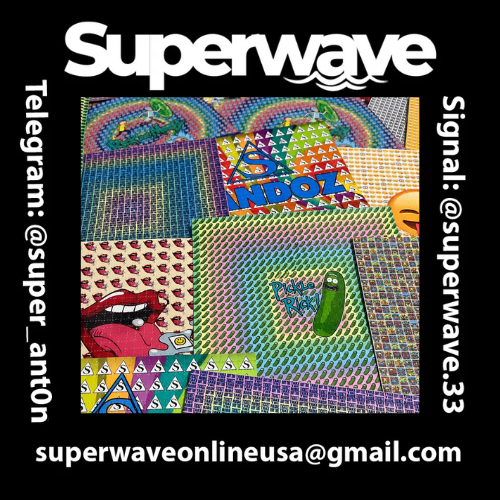

Please use only the official contact details below when reaching our support team.
Telegram account @Super_ant0n1 is NOT affiliated with us.
Our only official Telegram account is @Super_ant0n — without the “1” at the end.
For your security, always verify that you are communicating with one of the official accounts above before sending any payment. We cannot accept responsibility for payments sent to impersonators or unauthorized accounts.

Price range: $80.00 through $1,600.00
LSD blotter tabs are small squares of absorbent paper, often printed with colourful artwork. Some feature cartoon characters, others have geometric patterns, symbols or elaborate illustrations that only make sense when you see the complete sheet.
A single tab can be surprisingly small. Around 7 mm across is common, although sizes vary. Several tabs joined together form a strip, while larger perforated sheets can contain dozens or hundreds of individual squares.
The paper itself isn’t the psychedelic. It’s simply a carrier for lysergic acid diethylamide, better known as LSD or acid.
What makes blotter paper interesting is the combination of chemistry and underground art that has developed around it. The designs have become recognisable enough to attract collectors, even when the paper contains no drugs at all.
But there’s a distinction that tends to get lost in discussions about particular blotter designs. The artwork doesn’t establish what’s on the paper. A familiar print can be reproduced, and two nearly identical tabs can contain very different substances.
LSD is a synthetic psychedelic compound first prepared by Albert Hofmann in 1938 while working at Sandoz in Switzerland.
It was initially investigated for its possible pharmaceutical applications. Later, LSD became closely associated with the counterculture movements of the 1960s.
Blotter paper emerged as one of its most recognisable forms.
The paper is absorbent and usually divided into small squares by perforations. Those squares are commonly called tabs, blotters, trips or tickets.
Unlike a tablet or capsule, a blotter doesn’t have much physical substance to it. It’s a thin piece of paper carrying an extremely small amount of an active compound.
LSD is measured in micrograms. One microgram is one-thousandth of a milligram, which helps explain why such a small piece of paper can carry a pharmacologically active quantity.
The European Union Drugs Agency identifies blotter paper as one of the principal forms in which LSD has circulated, alongside liquids, small tablets and gelatine squares.
Of course, paper resembling an LSD blotter doesn’t necessarily contain LSD. The same material is used for printed artwork and can carry other substances.
Blotter paper has become almost as recognisable as LSD itself.
Early LSD distribution wasn’t limited to paper. The drug appeared in tablets, capsules and other preparations before perforated blotter sheets became widespread.
According to a history published by the Multidisciplinary Association for Psychedelic Studies (MAPS), LSD began appearing on perforated sheets around 1970.
The artwork developed alongside the format.
Early designs included simple symbols and repeated patterns. More elaborate prints eventually followed, drawing on psychedelic illustration, popular culture, spiritual imagery and underground graphic art.
Some designs were deliberately strange. Others borrowed familiar characters or logos.
The complete sheet was often more visually interesting than any single tab. A small square might contain only part of a face or symbol, with the full picture emerging when dozens of tabs were viewed together.
Artists and collectors took notice.
Blotter art eventually became a category of collectible printed material in its own right. Drug-free sheets have been produced, exhibited and sold as artwork.
That history explains why images associated with LSD blotters continue to circulate independently of the drug.
The artwork survived as a visual culture, even outside the context in which it originally became famous.
There isn’t a standard design for LSD blotter paper.
A sheet might carry one large image divided by perforations. Another might repeat the same symbol across every square.
The prints can be quite detailed, especially when the design is viewed across a complete sheet. Individual tabs often show only fragments of the original artwork.
You’ll find everything from simple black-and-white patterns to brightly coloured illustrations.
Some designs become widely recognised within psychedelic communities. That recognition can lead people to associate a particular print with a supposed strength or type of LSD.
The problem is that artwork can be copied.
A design that once appeared on a laboratory-tested sample doesn’t establish the contents of another sheet carrying the same image.
Even the names associated with blotter designs aren’t necessarily reliable identifiers. They’re often informal labels rather than documented product specifications.
A striking print might make a sheet memorable. Chemically, it tells you very little.
No, and there is good analytical evidence for that.
A forensic study published in the Brazilian Journal of Pharmaceutical Sciences examined 22 seized blotters containing LSD.
The researchers reported an average of 67.55 micrograms per blotter, with substantial variation between samples.
That number is a finding from one particular collection of seized material. It shouldn’t be treated as the average strength of every LSD tab or as a reference for an untested product.
Still, the research demonstrates something useful. A single paper format doesn’t imply a standard chemical concentration.
Claims about unusually strong tabs are common, particularly when a design has developed a reputation.
Without suitable laboratory testing, those claims remain unverified.
The paper’s size, thickness, colour and artwork cannot establish how much LSD is present.
Neither can a product name.
For a scientifically meaningful potency claim, the analysis needs to identify the compound and measure its quantity using an appropriate validated method.
Both formats can contain exactly the same psychoactive compound.
Liquid LSD is a solution containing lysergic acid diethylamide. Blotter paper is an absorbent carrier that can hold the compound in dried form.
The psychological effects arise from LSD itself, rather than the printed paper or the presence of a liquid carrier.
The formats have different physical characteristics, but there is no established scientific basis for claiming that blotter LSD produces a fundamentally different kind of psychedelic experience.
Descriptions of liquid LSD as cleaner, or blotter LSD as more visual, are not supported simply by the format.
Other factors matter much more, particularly the actual compound present, its concentration and the individual’s response.
The comparison also illustrates why packaging can be misleading.
A small dropper bottle may look professional. A printed blotter sheet may carry familiar artwork. Neither presentation proves chemical identity or purity.
For more detail on the solution form, see our separate guide to Liquid LSD: Effects, Duration, Strength and Safety.
LSD interacts with serotonin receptors, particularly the 5-HT2A receptor, which plays an important role in its psychedelic effects.
Its influence on brain signalling can alter sensory perception, attention and the way different experiences are interpreted.
People commonly describe visual distortions. Colours can appear unusually intense, ordinary patterns may seem to move, and the perceived size or shape of objects can change.
Time can feel distorted too.
A short period might seem much longer than it actually was. Thoughts can take unfamiliar directions, and everyday surroundings may suddenly feel strange.
The emotional changes are harder to summarise because they vary considerably.
Some experiences involve excitement, happiness or a heightened sense of connection. Others are marked by anxiety, confusion or fear.
Controlled studies have also documented physical changes, including increased heart rate, elevated blood pressure and pupil dilation.
The experience doesn’t remain identical from beginning to end. Psychological effects can fluctuate over several hours, and the surrounding environment can influence how distressing or comfortable they feel.
Importantly, none of these effects is specific to a particular blotter illustration.
There is no credible evidence that a cartoon-themed tab produces one type of experience while a geometric design produces another, assuming both contain comparable amounts of the same active substance.
LSD has a relatively long period of action compared with many other psychoactive drugs.
The European Union Drugs Agency describes effects that can continue for approximately 8–12 hours or longer.
That range is consistent with findings from controlled human studies, although duration varies.
The noticeable effects don’t necessarily stop suddenly. Changes in perception and mood can gradually become less prominent, while difficulty sleeping or feeling unsettled may persist.
This is one reason an LSD experience can be particularly demanding. The altered state can last for a substantial part of the day.
Blotter paper doesn’t create a separate duration profile.
The amount of LSD involved and individual biological differences are more relevant than whether the compound was carried on paper.
An unverified tab introduces another uncertainty: the substance may not be LSD at all, in which case published information about LSD’s duration might not describe the actual effects.
Yes. This is one of the most important issues associated with unidentified blotter paper.
The small paper format isn’t exclusive to LSD.
Forensic laboratories have identified other psychoactive compounds on blotters, including substances from the NBOMe family and certain substituted amphetamines.
Some of these compounds have been misrepresented as LSD.
A study examining samples submitted to a drug-checking service at Portugal’s Boom Festival in 2014 provides a useful example.
Of 245 samples expected to contain LSD, approximately 67.3% contained LSD alone. Another 24.1% contained a different psychoactive substance without LSD.
That finding applies to the samples examined at that event, not to all blotter paper in circulation. But it demonstrates why relying on a familiar design or a seller’s description can be dangerous.
NBOMe compounds are particularly concerning because some have been associated with severe poisoning, seizures and fatal outcomes.
Other unexpected substances may have different durations, cardiovascular effects and toxicological risks.
The print cannot distinguish between them.
Nor can the fact that a piece of paper looks professionally manufactured.
Laboratory analysis can identify LSD and, with suitable methods, measure how much is present in a sample.
Techniques such as liquid chromatography and mass spectrometry are used in forensic and analytical settings.
Different testing methods answer different questions.
A presumptive colour-reaction test may suggest the presence of a particular chemical class, but it cannot establish a complete ingredient profile or dependable concentration.
More selective laboratory techniques are needed for stronger confirmation and quantitative results.
The difference is important because identifying a substance and measuring its concentration are separate analytical tasks.
A result showing that LSD was detected does not automatically establish purity, the absence of other compounds or the amount present on every tab of a sheet.
No visual inspection can replace that information.
The most immediate risks are associated with LSD’s effects on perception, emotional state and judgment.
A person experiencing intense visual distortions or confusion may misinterpret ordinary situations and become vulnerable to accidents.
Anxiety and panic can also become severe. In some circumstances, an individual may experience paranoia or frightening thoughts that are difficult to distinguish from reality.
LSD can produce cardiovascular effects, including increased heart rate and blood pressure.
Its effects on mental health deserve particular attention.
People with a personal or family history of certain psychiatric disorders, especially psychotic disorders, may face additional risks.
Persistent or recurring visual disturbances have also been reported after hallucinogen exposure. These are sometimes classified as hallucinogen persisting perception disorder, or HPPD.
HPPD is uncommon, and its underlying mechanisms aren’t fully understood.
The possibility of an unexpected drug on the paper adds another layer of risk. The clinical safety information for LSD cannot be applied automatically to other substances sold under the same name.
Seizures, severe overheating, chest pain, loss of consciousness or extreme agitation after suspected drug exposure require urgent medical assessment.
LSD is not commonly associated with a physical dependence syndrome resembling that of opioids or alcohol.
However, tolerance can develop rapidly with repeated exposure.
The absence of a typical physical withdrawal syndrome shouldn’t be interpreted as evidence that the drug is risk-free.
Disruptive psychological experiences, impaired judgment and persistent perceptual symptoms remain concerns.
The use of LSD alongside other psychoactive substances or medications introduces additional uncertainty, particularly where interactions have not been adequately studied.
A person’s response is influenced by more than the compound alone.
LSD is controlled in many countries, regardless of whether it appears on paper, in liquid form or in another preparation.
In the United Kingdom, LSD is a Class A controlled drug under the Misuse of Drugs Act 1971.
In the United States, LSD is classified under Schedule I of the federal Controlled Substances Act, subject to the relevant authorisation requirements for research and other permitted activities.
The design printed on the paper doesn’t change the legal status of LSD.
There is also an important distinction between drug-containing blotter paper and drug-free blotter artwork. A printed sheet that contains no controlled substance isn’t automatically equivalent to an LSD preparation merely because it resembles one.
The precise legal treatment of any item depends on its contents and the jurisdiction concerned.
Blotter tabs are generally small squares of absorbent paper. Their chemical contents cannot be established from the paper alone.
No. Prints can be reproduced, and artwork has no reliable relationship with the amount or identity of a substance present.
Acid is a common informal name for LSD. Blotter refers to one of the forms in which LSD may be found.
No. Although colourful illustrations are familiar, blotter paper can also be plain or carry simple patterns.
Yes. Forensic studies and drug-checking programmes have identified other psychoactive compounds on papers presented as LSD.
Substantial subjective effects often last approximately 8–12 hours, although experiences can be shorter or longer. An unidentified substance may have a different duration.
That cannot be assumed without appropriate analytical evidence. A sheet’s appearance doesn’t establish the chemical concentration of its individual squares.
LSD blotter paper has an unusual place in psychedelic history. It is both a drug-associated format and an underground art form, with decades of printed designs, cultural references and collectors’ interest behind it.
The artwork is the visible part. The chemistry isn’t.
A recognisable design can tell you something about the history or visual culture of blotter paper. It cannot tell you whether the paper contains LSD, how much is present or whether another substance has been substituted.
For those questions, the evidence has to come from chemical analysis rather than appearance, reputation or a printed name.
| Paper Tabs | 10x, 25x, 50x, 100x, 250x, 500x, 1000x |
|---|



Reviews
There are no reviews yet.